

 Let’s be real, your team is stressed about money, and it’s hitting your business harder than you might realize. This isn’t just about corporate buzzwords or checking a box. True financial wellness programming for employees goes way beyond a 401(k) plan and has become one of the smartest investments you can make in your people.You start financial wellness for employees with one live session built on the benefits you already pay for. Then you measure what your people do in the next 90 days. That’s the short answer. You don’t need a vendor search, a login, or a new budget line to begin. You need a room, a baseline, and one step per person.
I’m not a financial advisor. I’m a coach. For 16 years I’ve taught money inside NFL and NBA organizations and for employers, associations, and universities. When an HR leader asks me where to begin, I ask one question back. What will your people do differently the week after? If you can’t answer that yet, you haven’t started. So this is the 90-day plan I’d hand you. A keynote or workshop is the middle of it, because that’s the step that gets people moving.

Why is money stress at work your problem to solve?
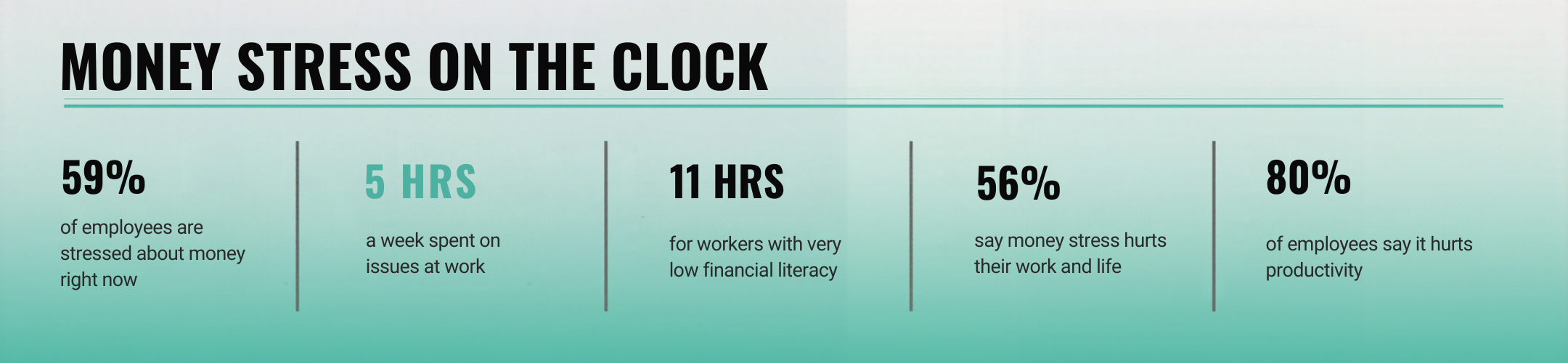
Money stress is your problem because it clocks in with your people every morning. It costs you hours long before it costs you a resignation. PwC’s 2026 Employee Financial Wellness Survey found 59 percent of employees are stressed about their finances right now. It also found 53 percent have less than $5,000 saved for an emergency. And 44 percent put necessities on a credit card because they can’t cover them any other way.
That stress keeps a schedule. The 2026 TIAA Institute and GFLEC Personal Finance Index found the average worker spends about 5 hours a week on personal money issues at work. For workers with very low financial literacy, it’s 11 hours. That’s more than a full workday, every week.
Your people feel it, and so do you. Morgan Stanley’s 2026 State of the Workplace study found 56 percent of employees say financial stress hurts their work and personal life. In the same study, 80 percent of employers said those worries hurt productivity. So I treat money stress as a performance issue. Nobody on your team failed. Most of them never got to run the drill.
What do most employers get wrong when they start?
Most employers start with a tool, and the better first move is a conversation. They buy access to something, send one email, and wait. Then the usage report comes back thin, so leadership decides the team wasn’t interested. But the team was interested. PwC found 48 percent of employees are highly motivated to learn new financial planning skills. It also found 41 percent say their education or background didn’t prepare them to handle money. They wanted the reps, and they got a link.
There’s a second mistake, and it’s quieter. Leaders guess how their people are doing, and they guess high. Bank of America’s 2026 Workplace Benefits Report found 71 percent of employers rate their workforce’s financial wellbeing as good or excellent. Only 55 percent of employees agree. That 16-point gap exists because nobody says “I’m behind” out loud at work. So the first job of anything you launch is to make it safe to say so.
The third mistake is building something new when the benefits are already there. Morgan Stanley found 91 percent of HR leaders say their company needs to do a better job helping employees understand and use their financial benefits. You’re already paying for the match, the HSA, and the EAP. So for most teams, the way to start financial wellness for employees is a translation job.
How do you start financial wellness programming for employees in 90 days?
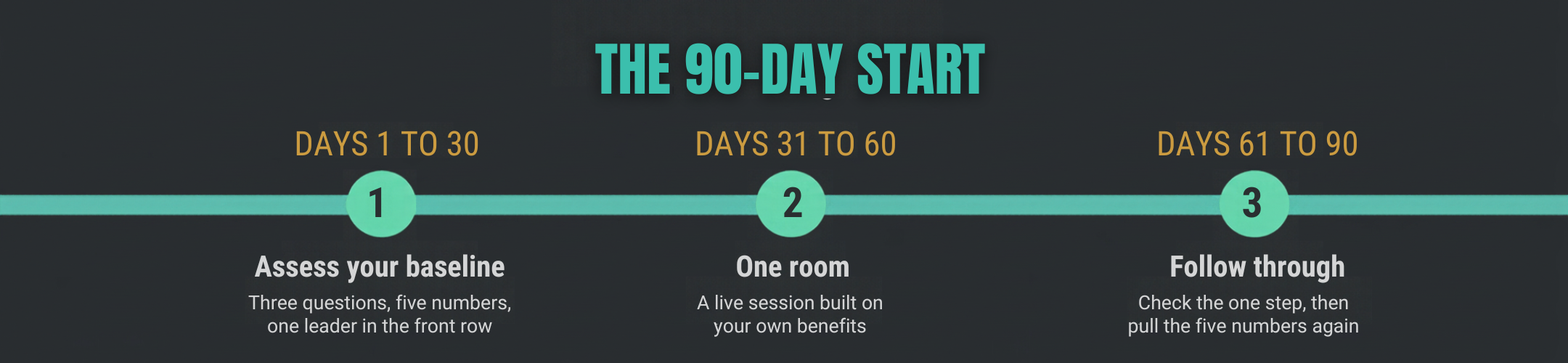
You start financial wellness programming for employees in three 30-day blocks. First you assess your baseline. Then you put everyone in one room. After that, you follow through. Here’s the plan.
Days 1 to 30: assess your baseline. I ask every room to assess their baseline before they build a plan. Your company does the same thing.
- Send a three-question anonymous survey. What’s your biggest money worry right now? How confident do you feel handling your money, 1 to 10? What do you want to learn first?
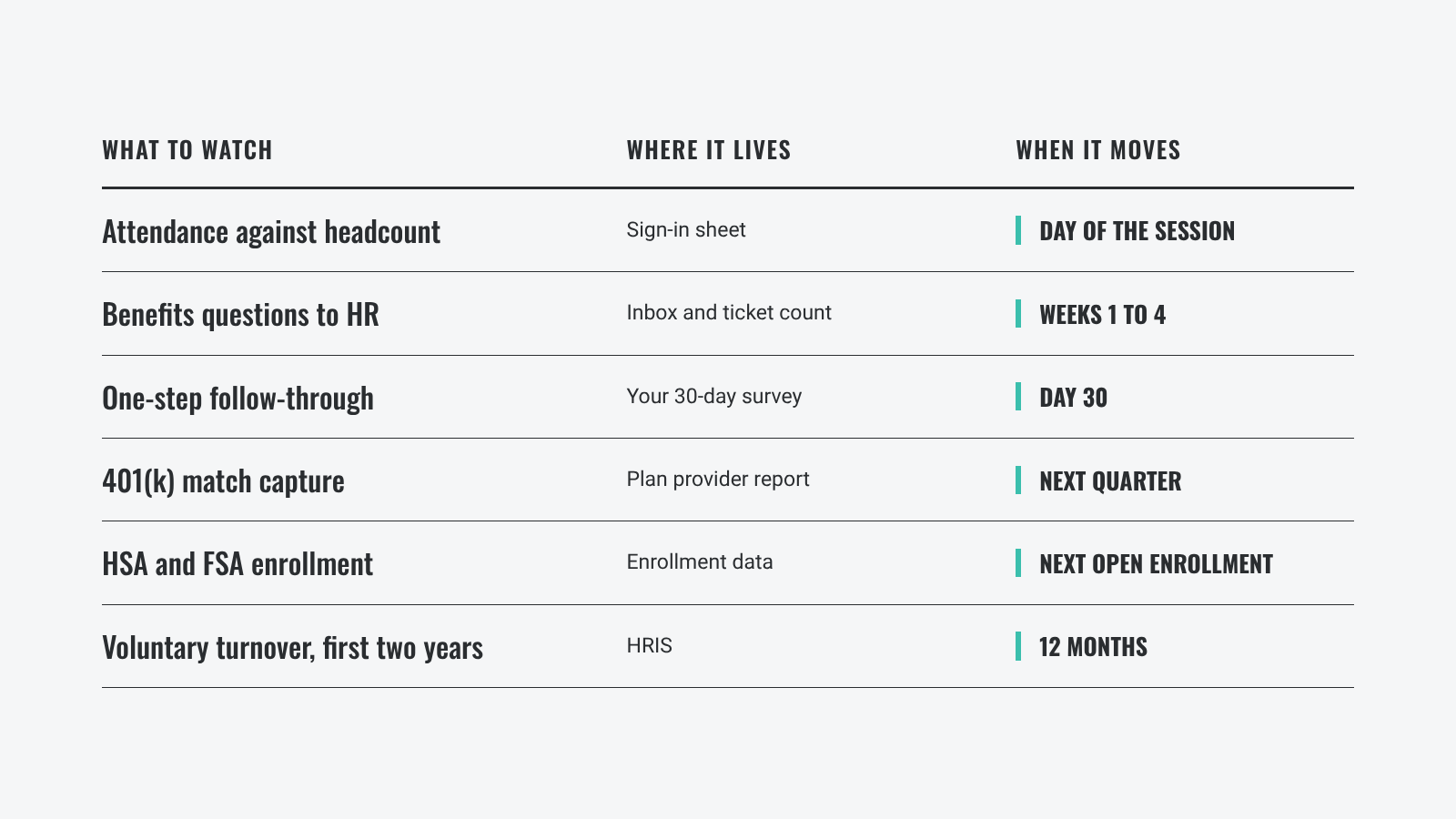
- Pull five numbers you already own. Those are 401(k) participation, the share capturing the full match, HSA enrollment, hardship withdrawal requests, and voluntary turnover in the first two years.
- Ask one senior leader to sit in the front row. When the boss raises a hand, everyone else does too.
Days 31 to 60: put everyone in one room. Book one live session, 60 or 90 minutes, in person or virtual. That’s where I come in. The sessions I build for HR and benefits teams use your benefits by name, because I read your benefits summary before I walk in. If you can, schedule it four to six weeks before open enrollment. Then the match and the HSA are fresh when the elections open.
Days 61 to 90: follow through. Thirty days after the session, send three more questions. Did you do your one step? What got in the way? What do you want next? Meanwhile, count the benefits questions HR receives, because that number should climb. Then choose the next rep. For most teams that means half-day and full-day workshops on the topic the survey ranked first. Finally, pull your five numbers again at day 90 and at the next open enrollment.
What happens in the room during that first session?
The room goes to work in the first two minutes, because people who participate are the people who change. Everybody writes down their earliest money memory. Then we do math, and we do it with real numbers.
For example, I teach burn rate. Take your expenses and divide them by your income. Next I put two real employees on the screen, side by side, with no names. The room sees fast that burn rate, more than salary, decides who’s under pressure. I run the same drill in NFL locker rooms. The paychecks have more zeros, but the math is identical. If the lifestyle and the income don’t match, the math has to math before anything else gets better.
After that, your benefits show up by name. When I talk about saving, your 401(k) match is the example. When I talk about a medical bill, your HSA is the answer. Near the end, the room calls out its five key takeaways, so nobody reads them off a slide. Everyone writes down one step for this week. They also leave with the Train Your Money Starter Playbook, which gives that step a place to live.
That’s the method: reps, not lectures. I’ve also written out the first ten minutes of a session, step by step if you want to see the sequence before you book one.
Which financial wellness topics should come first for your workforce?
The first topic is whatever your survey ranked first, and it usually lands in one of three tracks. I believe the order matters more than the volume. One topic that fits beats six that don’t.
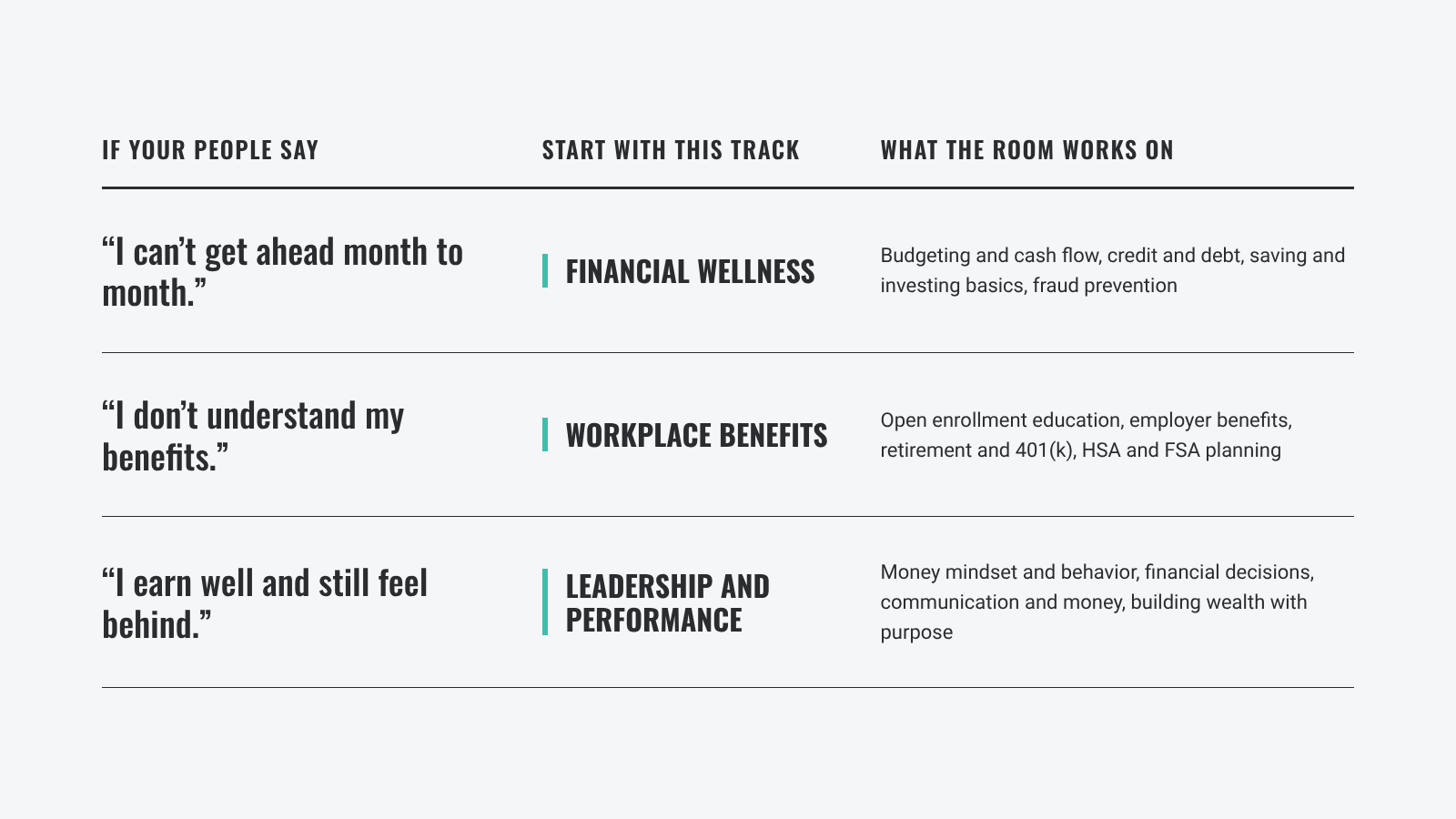
If your survey comes back split, start with cash flow. Remember the PwC number: 53 percent of employees have less than $5,000 set aside. Because of that, a retirement talk won’t land with someone who can’t cover a car repair. So fix the month first. The long-term topics get easier after that.
How do you know financial wellness programming is working?
You know it’s working when behavior moves, and most of it moves by the next open enrollment. That’s why you pulled the five numbers before you did anything else.
The returns are real when the work is done this way. Bank of America found 9 out of 10 employers offering financial wellness programs report measurable returns, including stronger retention. The same report found more than 1 in 3 employees left or considered leaving their job in the past year. So retention is where your CFO will look first.
After every financial wellness programming session, your team also gets an Event Recap from me. It covers participation, the themes the room raised, and what to do next. It never includes names or anyone’s numbers.
So here’s the decision. You can spend next quarter comparing options, or you can start financial wellness for employees with one good hour and watch what your people do with it. I’d pick the hour, because anyone can get good with money once somebody runs the reps with them. Tell me about your team and your calendar. My team will reply within one business day. Book Hillary.